



When education stops being theory
Some things cannot be learned from a textbook – responsibility, confidence, or the ability to handle real life. These only develop when a person truly experiences them.
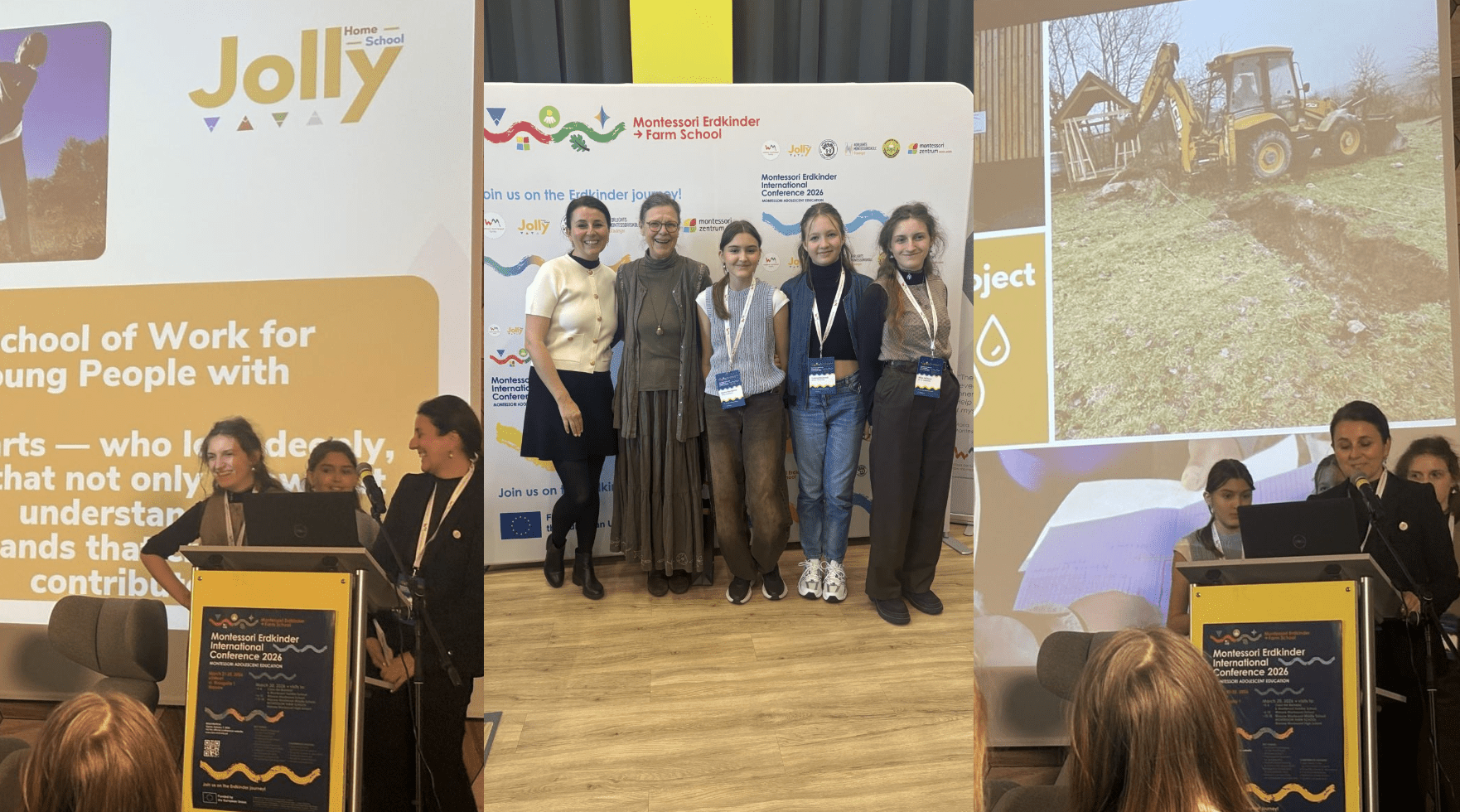
Over the weekend, we had the honor of being part of the international Montessori conference Erdkinder in Warsaw, where, as a project partner, we presented Jolly Farm – our environment for adolescent education.
We do not take this opportunity for granted – we see it as trust. And that is exactly why we want to talk about it.
What is Erdkinder and why it changes the way we see education
Erdkinder (translated as “children of the Earth”) is a Montessori concept for ages 12–18. It is based on one key question – what will children truly need in life?
At this age, young people are not looking for more information – they are looking for meaning, reality, and their place in the world. That is why this environment is created where they:
– work with both hands and mind
– experience the consequences of their decisions
– learn in the context of real life
Jolly Farm: when a farm becomes a classroom
At Jolly Farm, the very essence of learning changes. It is not a classroom full of materials, but a living environment. Our students:
– grow crops
– create products
– take care of the space
– sell and communicate with customers
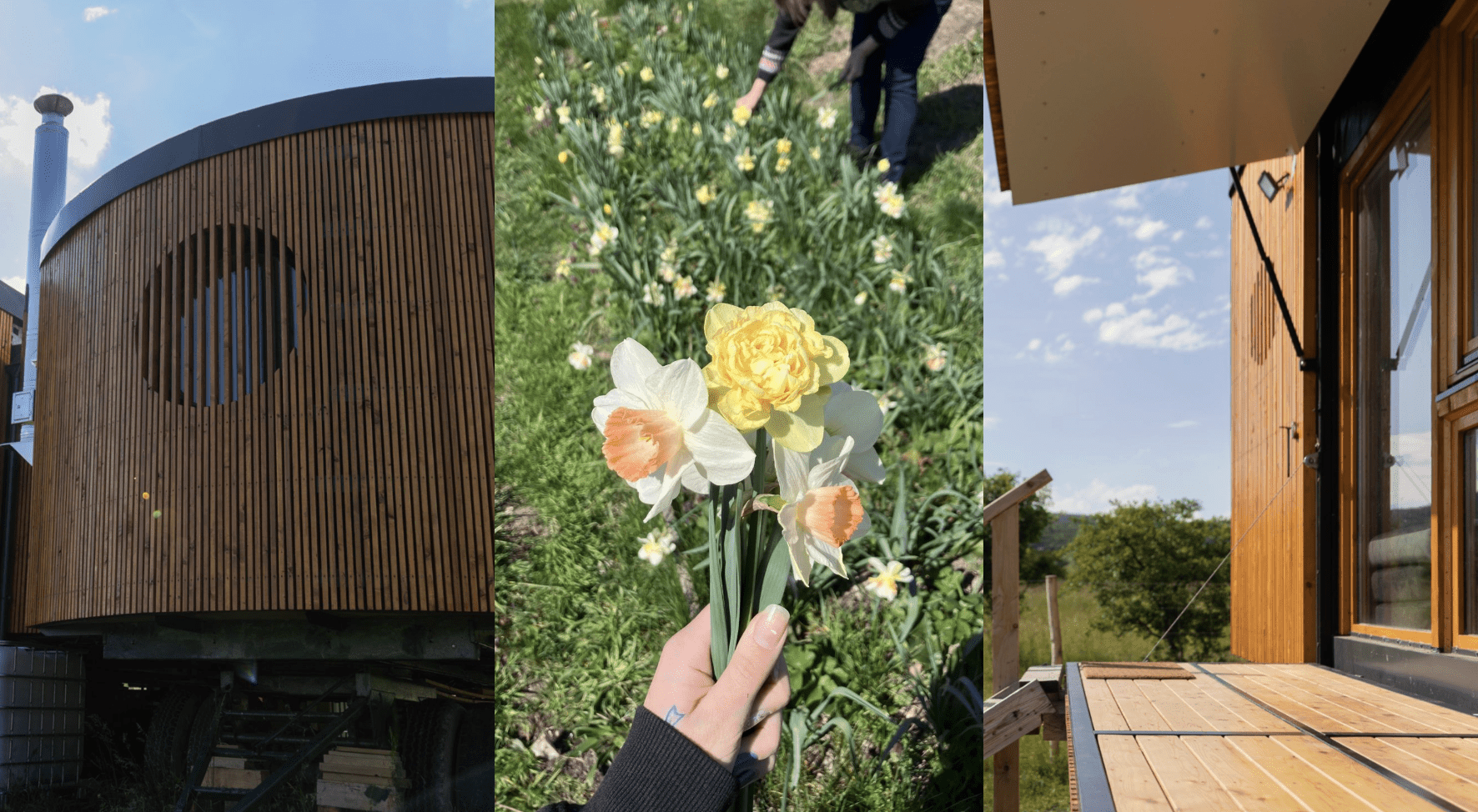
Not in simulation, but in real life. One of the first steps was transforming previously infertile land – old vineyards – into a living learning environment.
Together with experts, we began building permaculture raised beds, gradually turning the soil fertile. We also created our mobile ecological classroom – the Maringotka, providing a base for students directly in the field.
From strawberries to the market: the real learning cycle
Our students do not experience just growing. They experience the full cycle:
🌱 grow
🌱 process
🌱 present
🌱 sell
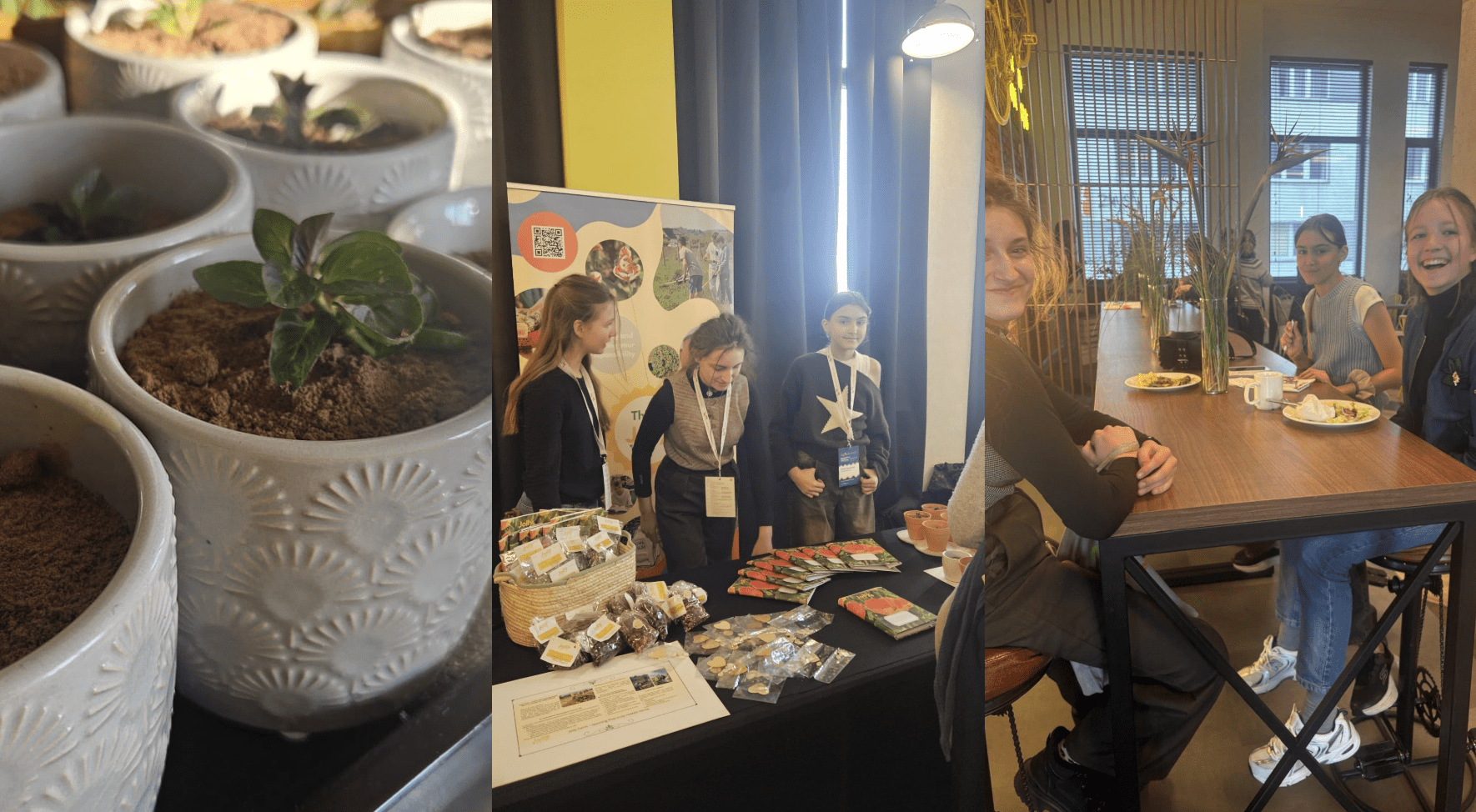
The first strawberry season was symbolic for us. Fresh, chemical-free, grown by their own hands and sold to real customers. Our first customers were parents, but we gradually expanded to local markets. This is where learning becomes real experience.
Montessori Erdkinder Conference 2026
“The girls were amazing… they did an excellent job. I am very proud of them.”
Our students presented the farm project, participated in an international panel, communicated with experts, and were not just part of the program – they were a full part of it. The feedback was powerful. People stopped, asked questions, and showed genuine interest.
And one of the lecturers, moved to tears, said:
“I would love to see your farm.”
At that moment, everything came together – work, trust, and meaning.
We are not trying to raise farmers
The farm is not the goal – it is a tool. What truly matters is developing skills that young people carry into life:
– problem-solving
– responsibility
– communication
– cooperation
– handling uncertainty
– persistence when things do not go as planned
Because these are the skills that define how they will live their adult lives.
Challenges as part of learning
This conference was not just a presentation for us. It was confirmation that young people are capable of more than we think, that trust leads to responsibility, and that reality is the best teacher. As was said during the conference:
“Young people are far more capable than we often assume.”
When the work is real, meaningful, and we trust them – they can handle it.
Montessori education in practice
With humility and gratitude, we thank you for the opportunity to be a project partner, present our work, and be part of an international community. We truly appreciate all the feedback, support, and interest we received. We believe we contributed value – just as this project has contributed to us.
Conclusion: education that makes sense
Erdkinder is not just a concept – it is an experience. And we are deeply grateful to have been part of it. Thank you.